
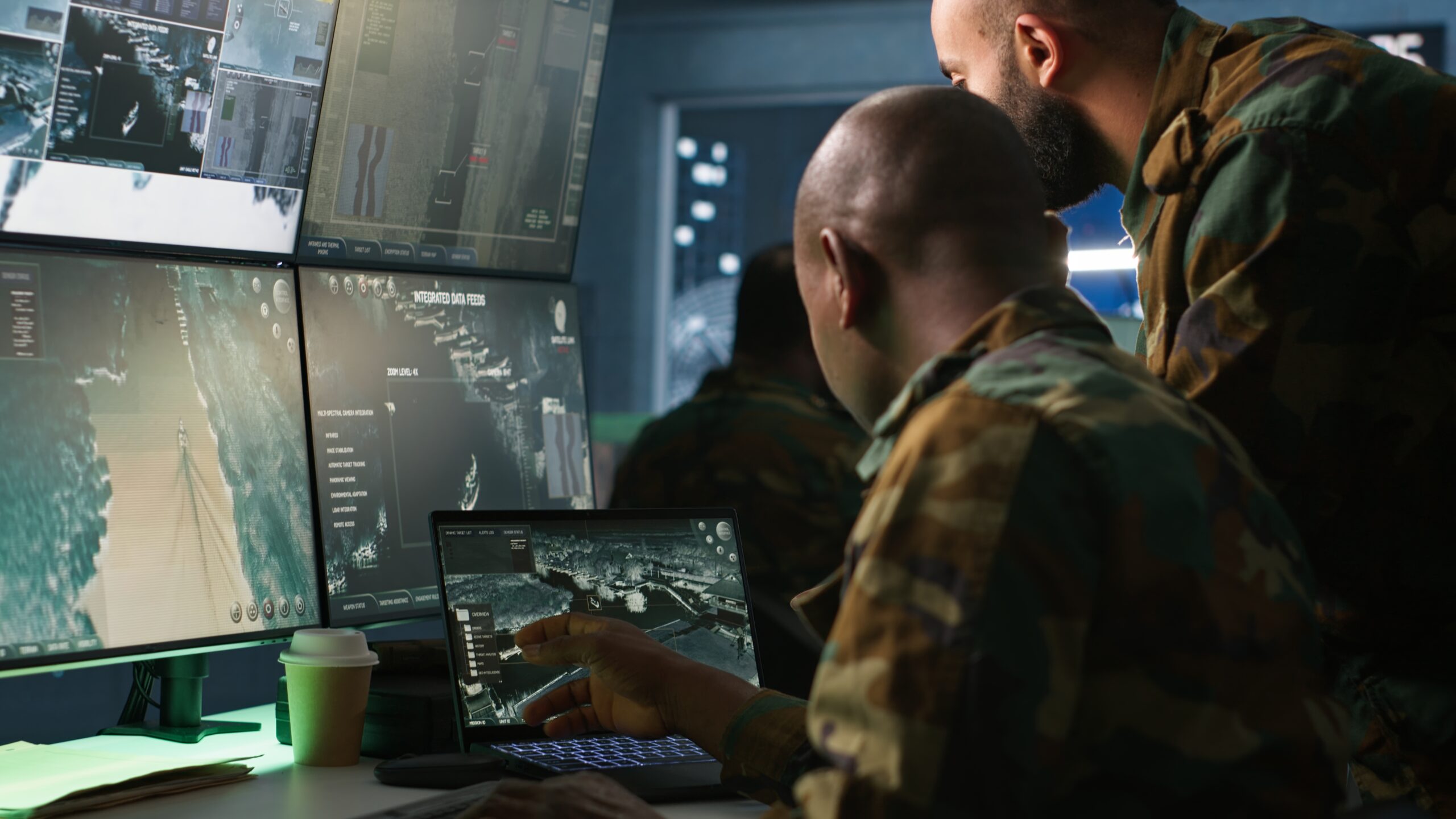
Defense-Grade Risk Management. Engineered for Mission-Critical Authorization.
As a trusted cybersecurity partner to the U.S. Department of Defense and Defense Industrial Base (DIB) for more than 20 years, Lunarline sets the standard for DoD RMF assessments. Today, backed by the enterprise stability of Motorola Solutions, we help defense contractors, program offices, and cloud providers navigate DoDI 8510.01 and DISA Cloud Computing SRG requirements. We don’t just assemble eMASS packages, we validate true mission-critical resilience to protect the warfighter.
Our Value
Validated by Defense Engineers, Trusted by Authorizing Officials
Securing an Authority to Operate (ATO) in the DoD environment requires far more than checking boxes on a spreadsheet. In an era of evolving cyber threats, Authorizing Officials (AOs) demand rigorous proof of operational security.
Born from decades of cybersecurity engineering, secure configuration and hardening, and offensive penetration testing from tactical military networks and command-and-control systems to modern hyperscale defense clouds, our senior assessors bring hands-on experience across the entire defense compliance lifecycle.
DISA Impact Levels & DoD Cloud SRG
Navigating DISA Cloud Security Requirements (DoD IL2 – IL6)
Commercial cloud offerings and defense platforms seeking to process Controlled Unclassified Information (CUI) or Classified data must satisfy the DISA Cloud Computing Security Requirements Guide (DoD CC SRG). Lunarline provides expert assessment and authorization support across all DoD Impact Levels:
DoD Impact
Level 2 (IL2)
Public & Non-Critical Mission Information. Accelerate your DoD cloud listing by leveraging reciprocity from your existing FedRAMP Moderate authorization.
DoD Impact
Level 4 (IL4)
Controlled Unclassified Information (CUI) & Non-Critical Mission Systems. Comprehensive testing of stringent access controls, boundary protection, and data handling requirements.
DoD Impact
Level 5 (IL5)
Higher-Sensitivity CUI, Mission-Critical Workloads & National Security Systems (NSS). Rigorous validation for systems supporting critical military operations and unclassified defense infrastructure.
DoD Impact
Level 6 (IL6)
Classified SECRET & National Security Systems. Elite security architecture validation and penetration testing for the highest-stakes national defense enclaves.
WHy Lunarline?
Key Differentiator
While high-volume compliance firms rely on generic checklists and junior auditors, Lunarline’s assessment teams consist of seasoned cybersecurity engineers, secure configuration specialists, and offensive penetration testers. For more than two decades, we have helped thousands of clients secure their most critical assets. We don’t just read controls, we understand the regulatory history and technical intent behind CNSSI 1253, NIST SP 800-53, and DoDI 8510.01. We evaluate your systems to ensure they withstand real-world adversaries, not just paper audits.
Frequently Asked Questions
Answers to your top questions about DoD RMF and achieving defense cloud authorization.
Disclaimer: Assessment and advisory services are strictly separated in accordance with Cyber AB ethics and impartiality rules.
Let’s Talk
Ready to Secure Your Defense ATO?
Partner with the industry’s premier defense assessment group to navigate DISA CC SRG, eMASS package authorization, and DoD RMF with confidence.